
The bulbs surrounding Bulbamite's body are always electrically charged. When enough energy has built up, these bulbs will glow bright green.
195 Custom Pokédex Entries by char_latte3412
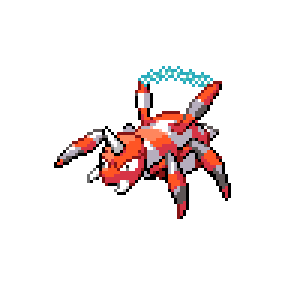
The electric arc between its top appendages will increase in intensity as it gets angry. It will start shocking itself if it doesn't calm down.

Voltzor's ball-like pincers serve as independent generators. During challenging battles, it brings its pincers together with devastating effects.
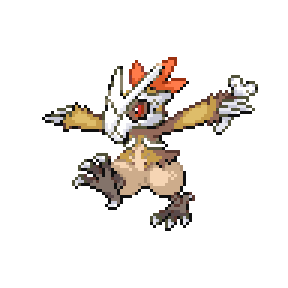
Cubusken conceals its face with the bones of its deceased parent. The piercing cries it emits resonate within the skull, unsettling nearby Pokémon.
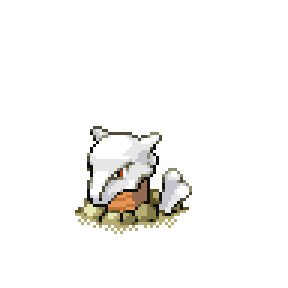
Theories state that Marolett has its own private collection of bones buried underground, each one suited to handle various situations.
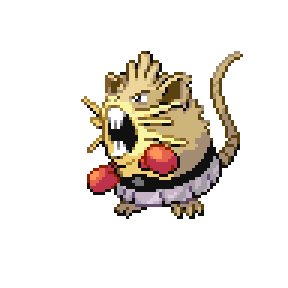
It is a skilled, yet unfair fighter. If it finds that it is losing a match, it will bite its opponent and pummel them while they're restrained.
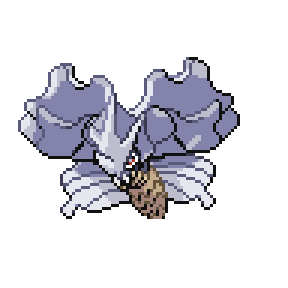
Despite Rhymoth's rock-like wings keeping it firmly grounded, its body is adorned by sharp spikes that exude a potent, highly-concentrated poison.
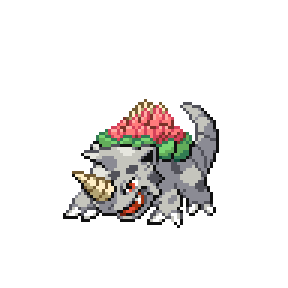
Proud of the budding seeds adorning its back, Rhysaur will charge at anyone who ventures too close. The seeds are highly poisonous if ingested.
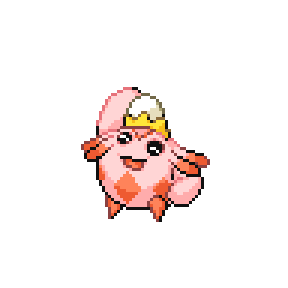
The egg on Channea's head is both nutritious and hydrating, a welcome sight to lost travelers. Most rangers deployed in deserts keep it as a partner.
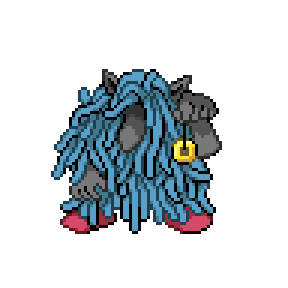
Residing in dark, swampy regions, Tanno whisks away hypnotized victims to its hovel, emerging again for new prey after many weeks have passed.
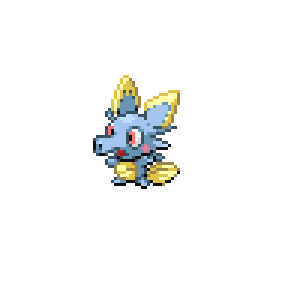
Easily startled, Horchu unwittingly releases ink from its snout at the slightest provocation. It is recommended Trainers pack extra sets of clothes.
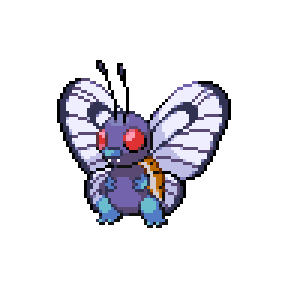
Wild Buttertle will establish nests in close proximity to a quiet beach. Local flora within the nest's vicinity thrive when springtime comes.
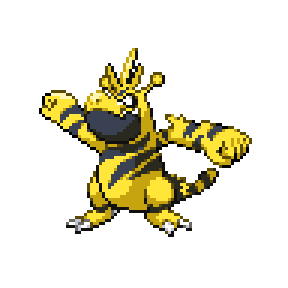
Groups of Electanaw frenzy at the approach of a thunderstorm, all rushing to find a vantage point. It will even bite its own kin for a prime spot.

The pointed cogs adorning Weeink's body are composed entirely of silk, but are capable of hardening to a toughness resembling steel.
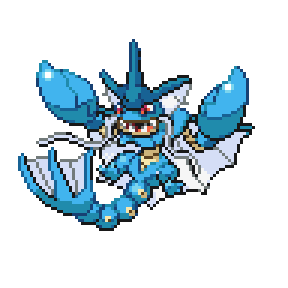
An adept glider, Gyaracor will skim just above the water's surface, viciously snatching and squeezing any unsuspecting prey with its strong tail.
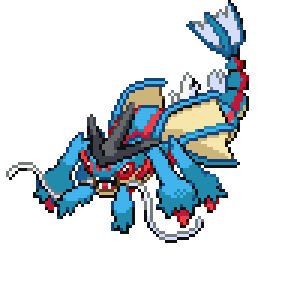
Devastatingly cruel, Gyaratula wraps its electrified feelers around ensnared victims and torments them with jolts of electricity for days on end.

Very affectionate, Fladra enjoys hugging those it trusts. However, Trainers must beware, as the mucus coating its body can leave nasty burns.

Omaeye can be found in many deep-sea caves. This Pokémon was almost hunted to extinction due to poachers wanting the large gem hidden in its shell.
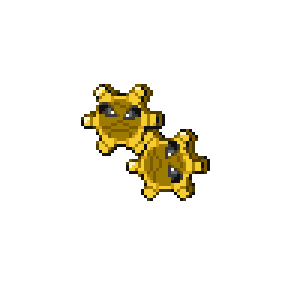
It can be found within the largest Beedrill colonies, serving as cogwork for rudimentary yet intelligent pulley systems used in transporting honey.
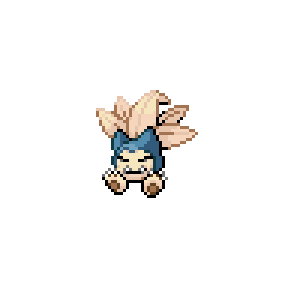
The leaves atop Snorish's head are coated with an awful-smelling poisonous film. How bad the stench is depends on its diet.

Though it is small, the stomping of Snorish's feet can make the ground shake. Its appetite is so voracious, it will eat the leaves off its own head.

Legend holds that it possesses the ability to dispel even the fiercest thunderstorms. Many ships carry a symbol of Zaptic in hopes of safe travels.
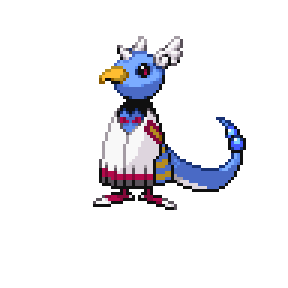
Legend has it that its crystal orbs can predict future rains. A popular local news station often features Dragotu during its weather forecasts.

Dragotu's clairvoyant abilities peak during storms. It gazes at the clouds during heavy rains, viewing crystal-clear images of the future.

Some ancient cultures revered Dragobok as a deity, offering it valuables for good weather. Supposedly, if displeased, it exacted painful revenge.

A Dragonix composed entirely of weather-controlling crystals is believed to be 1000 years old. The rains it summons give its body a sleek sheen.

The large crystals composing half its body grant Dragonix supreme control of the weather. It frequently summons rainstorms to deter trespassers.

Originally a product of fiction, Dragonix was brought to life through advanced genetic engineering. Disappointingly, it lacks wish-granting abilities.

Baytata burrows itself under grassy knolls during the day to sleep. The leaf on its head will poke above ground and absorb the sun's rays.

It tests its endurance by sinking its tail into pools of lava, competing against other Typhdile. The tails of veterans are entirely composed of magma.
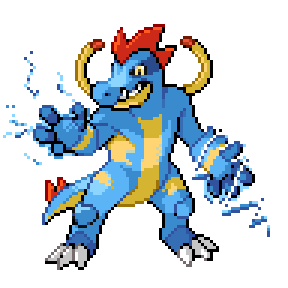
Feravire can effortlessly control both water and electricity. It often crafts itself boxing gloves made of water, sparking with electrical currents.

It doesn't mean any harm; however, Ledywear will often relax in vibrant flower fields only to find that it has trampled all vegetation around it.
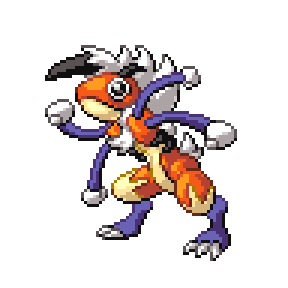
It often travels alone, cautious and easily startled. However, amidst rarely-seen packs, it reveals a harsh, brutal demeanor.
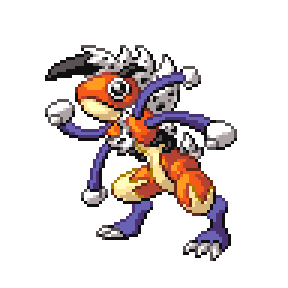
It is said that those stabbed by its rock spike will turn into a Ledyroc themselves. The superstitious will carry fresh citrus to protect themselves.
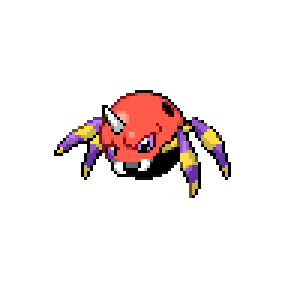
This Pokémon tends to live in abandoned buildings for peace and quiet. Ariaorb will spin intricate webs in decrepit door frames to catch prey.
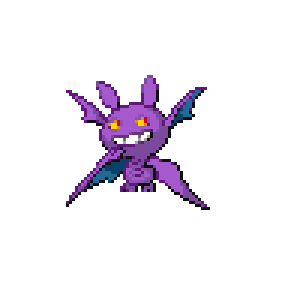
The poisonous film on its body is so noxious that any nearby Pokémon will slip into unconsciousness, allowing Croper to suck blood at its leisure.
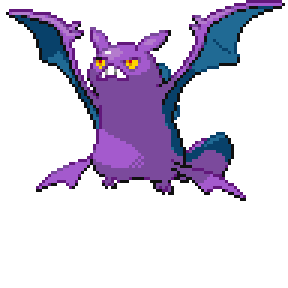
Crosire's inherently carefree nature has diminished its predatory edge. It relies on the remnants left behind by others to satisfy its bloodlust.
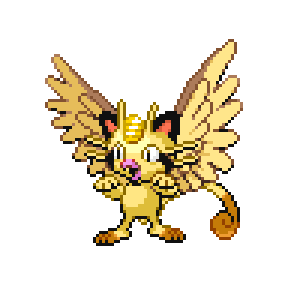
It is often associated with greed in old myths, the best-known being the tale of a Pidgeth flying too close to the sun in pursuit of its shiny light.
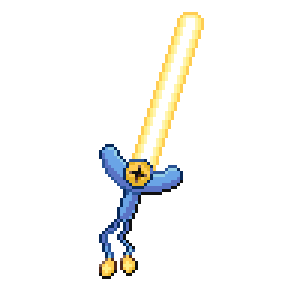
Chinedge's prominent blade is primarily composed of a liquid ectoplasm charged with a small electric current to give it its yellow glow.
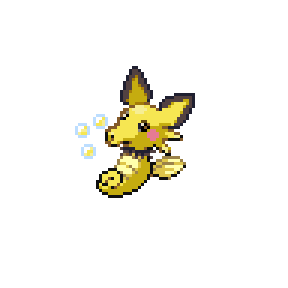
Pisea struggles to effectively retain its stored power and, as a result, swims with a weak electric barrier surrounding it at all times.
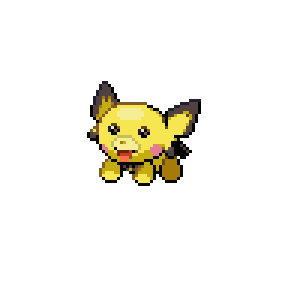
Despite its cute appearance, Piful are typically handled by professionals due to its lack of control of both its strength and electrical powers.
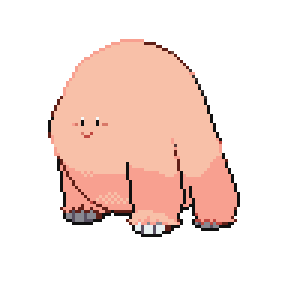
Unfit for the wild, Clefswine lacks any self-preservation instincts. Without a caretaker, it would continue smiling sweetly as it slowly starves.

Oblivious to its large stature, Clefswine will happily dance about during a meteor shower, often causing unintentional damage to its surroundings.
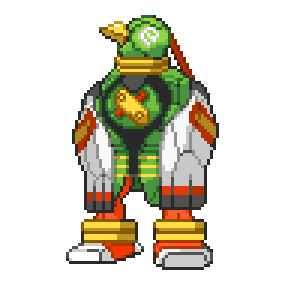
Able to stay perfectly still for years, archaeologists initially mistook Xalurk for a statue. A swivel of its head convinced researchers otherwise.
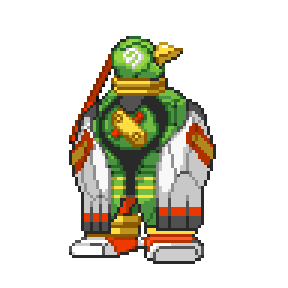
Xalurk has a small but loyal group of followers who believe they can see the future by observing the subtle intricacies of its pivoting head.
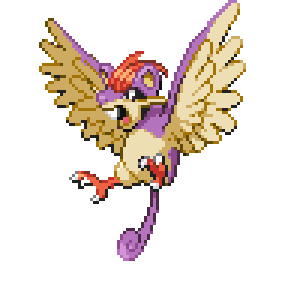
A common sight in major cities, it thrives in dirtier environments compared to Pidgeotto. Its keen vision enables it to spot prey even in dark alleys.
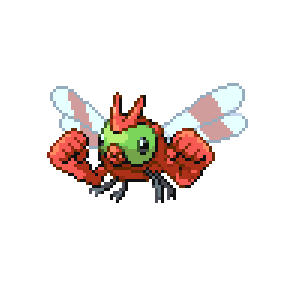
Yandude prefers to scurry along the ground and engage opponents face-to-face. Its legs are surprisingly powerful despite their small size.
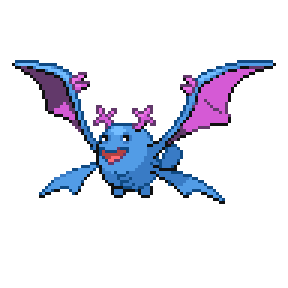
Though Woobat is capable of great aerial speed, it rarely utilizes it. The brutal airflow of flight is painful to handle for its external gills.

Nearly all subterranean lakes host habitats suitable for Woobat. It primarily forages for food underwater and seeks rest by flying to the ceiling.

The antennae atop its head are actually gills. When possible, it will sleep dangling from a low ceiling, its gills submerged in a shallow pool.
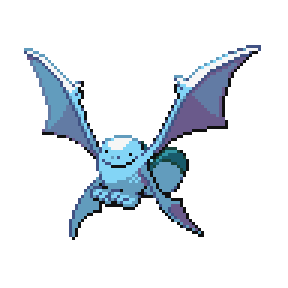
Quagbat's disproportionate limbs make flight awkward, yet it doesn't seem to mind. It has quickly gained popularity among younger generations.

As the sun sets, colonies of Quagbat emerge from caves and collectively dive into nearby lakes. They hunt, mouths agape, for any algae to feed on.
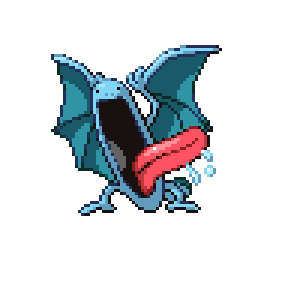
Though lacking fangs, it occasionally attempts to bite people or Pokémon to draw blood. Victims are left covered in an uncomfortable, slimy film.
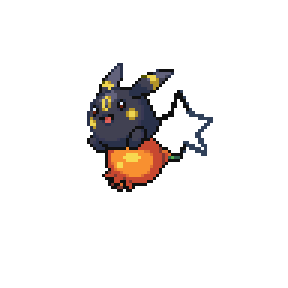
Most nights, Umbrill will bask under the moonlight and absorb lunar rays. This energy is stored in their orange tail to later be used for evolution.

Though similar in appearance to standard Ivysaur, the unusual flowers budding from Ivywrath's back and hands thrive only within an underwater environment. Ponds in which these Pokémon are found are said to be nearly completely free of algae.
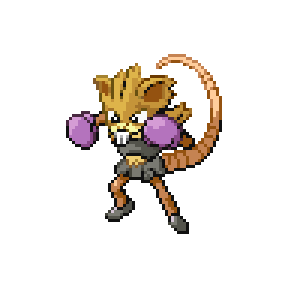
Ratchan is a hardy brawler and will fight on until its last breath. However, any shots to its teeth can cause this Pokémon excruciating pain.
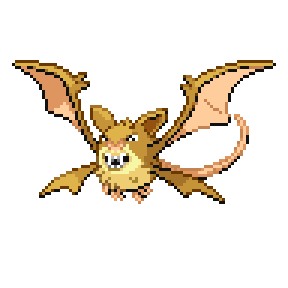
It can chew through wood in seconds, and it leads a colony of other bat-like Pokémon. It is considered by homeowners to be one of the worst pests.
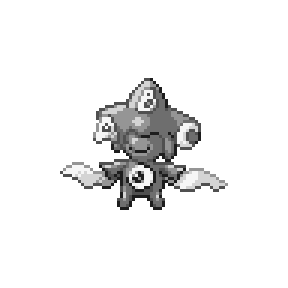
Some ancient cultures believed Unrachi act as translators for Jiown. The symbols on its head shift accordingly based on the viewer's own language.

This variant of Teddiwoodo travels inseparably with a rock-hard tree branch, which it uses as a tool to attempt honey-gathering in hard-to-reach areas.

Its green forearms are coated in a very sweet honey. During the summer, Combee will swarm Teddiwoodo, mistaking it for a nectar-producing tree.
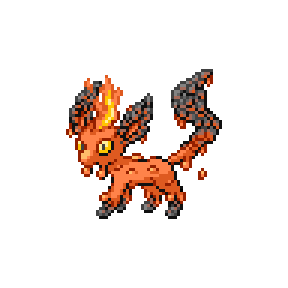
The plant life on its ears and tail have been severely burned. It still retains a strong connection with nature through the hardened mud on its feet.
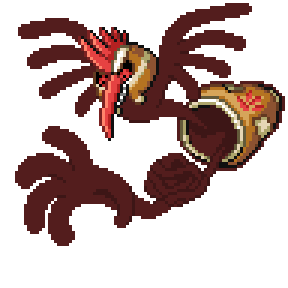
Feargrigus can easily soar up to 200 feet; however, its ghostly attachment to its urn-like body pulls it back to the ground if it overextends.

It is said that a Swinub's sensitive nose guided it to a specific mound of snow. Theories suggest a paranormal relationship exists between the two.

Swigast diligently gathers fresh snow to add to its mound, often seeking shelter within the mouth of its homemade refuge.
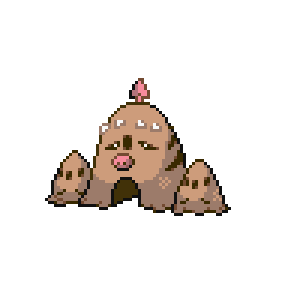
Children approach this Pokémon, expecting an intriguing sandcastle. Many are startled as Swisand sniffs furiously at the new, incoming smells.
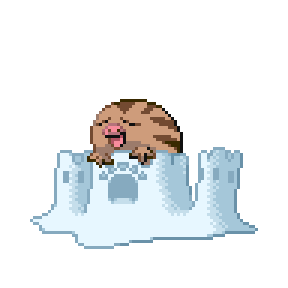
The ghostly ties between snow and Swinub are unbreakable. Working as one, Swisand can both defend and repair itself, a feat previously unattainable.
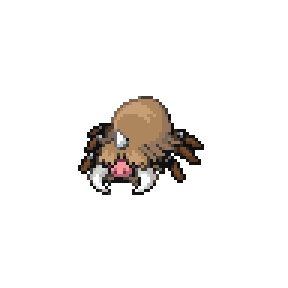
One of only a few arachnid Pokémon that are native to the taiga, its insulating fur helps it endure extreme cold. Its tusks and horn are made of ice.
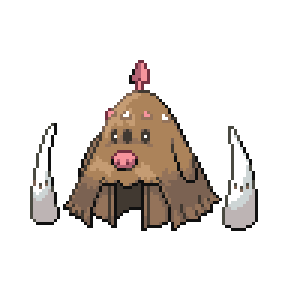
Pilosand often partners with wild Swinub, providing shelter to their newborns. In turn, it receives food which it would otherwise struggle to obtain.

The coral on its head rarely grows to full size. Because of its disproportionate body, Corinch frequently trips and breaks its horns.
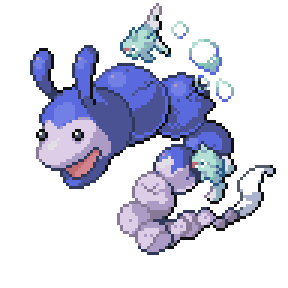
Mannix can be found in tropical seas, slithering amongst the coral reefs. Entire schools of Remoraid will swim alongside it, hoping for food scraps.
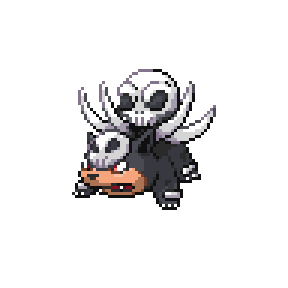
Young Hounsaur prove themselves by working together to take down a formidable foe. They then adorn their backs with the spoils of victory.
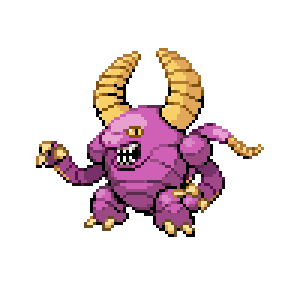
The pincers on Eksir's head are composed of numerous loose scales. When threatened, it rapidly vibrates its muscles, creating a low rattling sound.

Kingdash is often featured in beautiful works of art, where it's portrayed pulling the golden chariots of water deities.

Hitmonpoke are perfectly capable of balancing on their tails and unleashing devastating kicks on their foes. However, they much prefer to lie around.
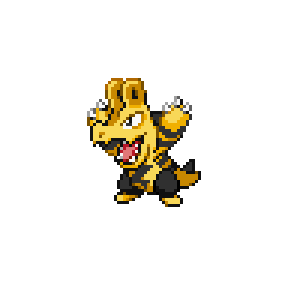
Excitable by nature, Eledile rapidly generates electricity that must be discharged, often shocking itself and those nearby unintentionally.
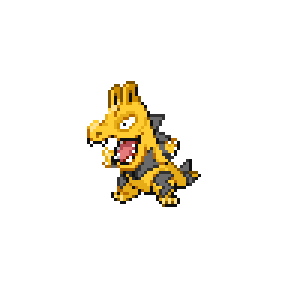
Trainers must stay vigilant if they own this Pokémon. Eledile's play style involves biting others with its sharp, electrified fangs.

The markings on Arnair's hood are highly visible on its shed skin. Its territory is often littered with discarded skins, serving as a scare tactic.

The orbs on its tail store a harsh poison; when they glow bright red, Arnair's venomous bite is at its deadliest.
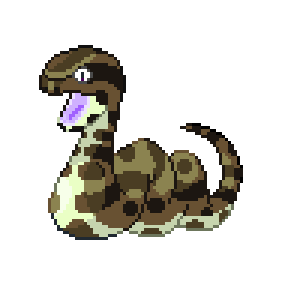
This Arnair variant lacks the venomous potency of its relatives. However, its ability to camouflage itself in rugged terrain compensates for this.
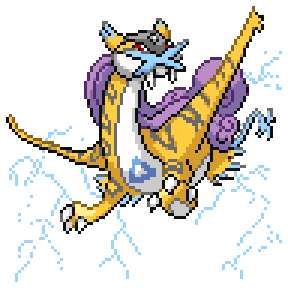
Highly empathetic, Raitias resigns itself to secluded mountains, lest it risk unleashing violent thunderstorms in response to nearby hostility.
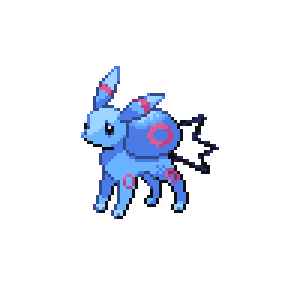
Azureon are considered great companions for small children. Its bouncy tail provides entertainment and its pink rings act as a natural night-light.
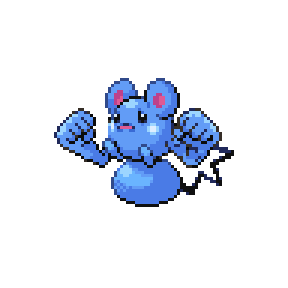
The fists that Azudude brandishes are very rubbery, much like its tail. It can leave a nasty welt if one were to be struck full-force.

This variant of Azudude is able to utilize its rubbery body in battle. It can throw and ricochet itself off objects to catch its opponent off-guard.
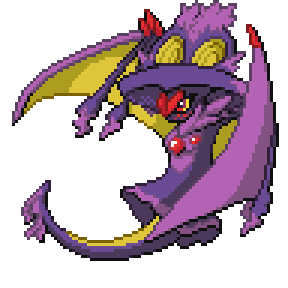
On moonless nights, lost travelers claim they can hear the distant echoes of bone-chilling incantations from Misvern's cries.

With only limited control of its psychic power, Mimecool rely heavily on mimicking its parents, lest it unknowingly release fatal levels of venom.
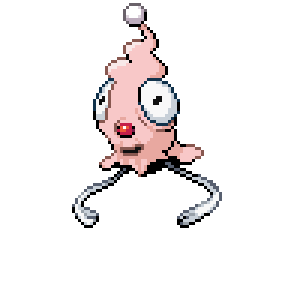
An artificially-created variant of Mimecool, this Pokémon is prominently featured in many horror flicks as a trivial jump scare.
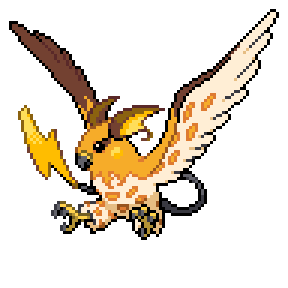
When it dives at prey, its tail stiffens and straightens out. Spectators lucky enough to view this phenomenon describe it as a living thunderbolt.
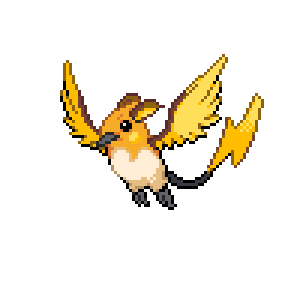
It will grab any prey it lays eyes on. Once captured, Raiinder sends a small electric current through its talons to keep its meal from moving.

It is estimated that Electiligatr has a biting power of over 4000 PSI, with electrified fangs capable of delivering 15,000 volts of electricity.
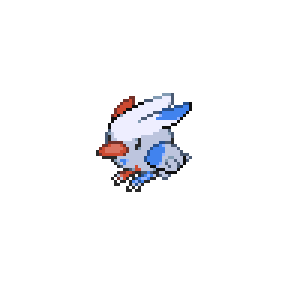
Being whole-heartedly good, Togetu are often kept by fortune-tellers to ensure only good fortunes are read. These readings are quite expensive.
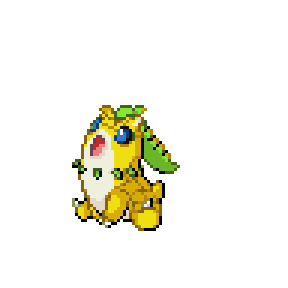
Severe sandstorms can ravage the leaf atop Sandrita's head. Yet, each endured storm only seems to strengthen the plant's resilience.

This vigilant variant of Leafpom guards its forest with its life. If it spots a disturbance, it can quickly assemble a weapon from its surroundings.
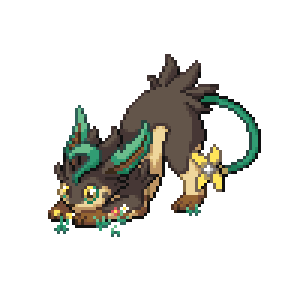
Leafray will bond with its pack through play by lowering its head and swishing its tail, its yellow flower crackling with eager electricity.
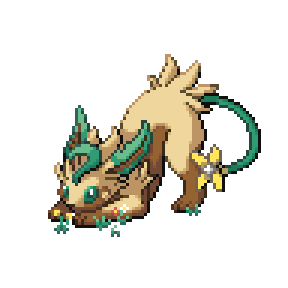
It relies primarily on photosynthesis for energy, often basking in sunlight to rest. A healthy Leafray boasts a larger flower at the end of its tail.
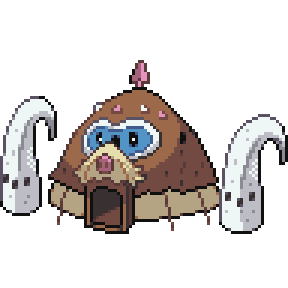
Its warm hide and gaping maw appear as a sanctuary to those caught in blizzards. However, Mamosand will steal the vitality of any who venture inside.
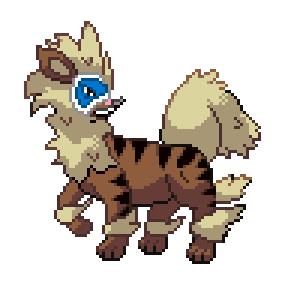
Modern-day Mamonine bears little evidence of its once-mighty ice tusks. Theories suggest the flame burning within its body has melted them away.
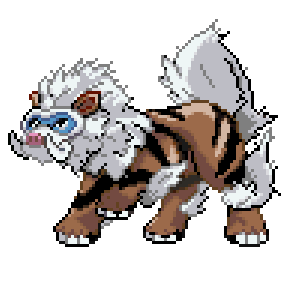
This variant of Mamonine thrived during the ice age, enduring the harshest winters in history thanks to its fierce internal flame.
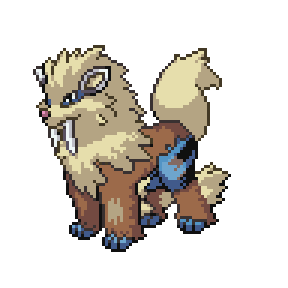
This domesticated Mamonine variant is a popular partner for those in cold climates. It sleeps comfortably in blizzards.
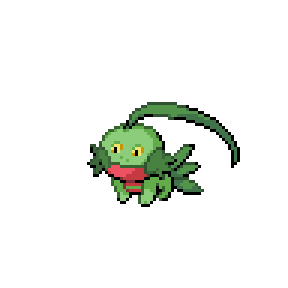
Grokip can be found by mountain lakes. It will often change its sleeping habits, sometimes dozing in the lake and other times at the tops of trees.
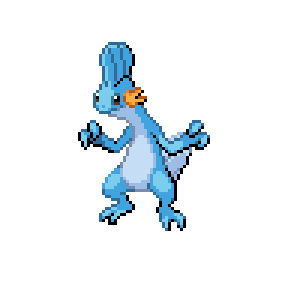
An adept swimmer, Mudvyle's sleek body can cut through water at nearly 35 mph. It mainly feasts on aquatic vegetation native to lakes.